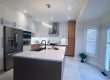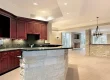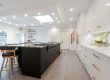
Two-tone kitchen cabinets means using two different colours or finishes across your cabinetry — most often a contrasting shade on the island or lower cabinets, with a lighter tone on the uppers. Done well, it adds depth and a custom, designed feel without the visual weight of an all-dark kitchen or the flatness of an all-white one.
At Joseph Kitchen & Bath, mixing finishes isn’t a trend we’re chasing — it’s a natural extension of what a custom shop can do that a stock cabinet retailer can’t. When every piece is built in-house, matching sheens across two different paint colours, or pairing a painted finish with real wood grain, is a fabrication decision we make on purpose, not a limitation we work around.
The 5 Placement Strategies
Before picking colours, decide where the contrast goes. This decision shapes the whole kitchen more than the colours themselves.
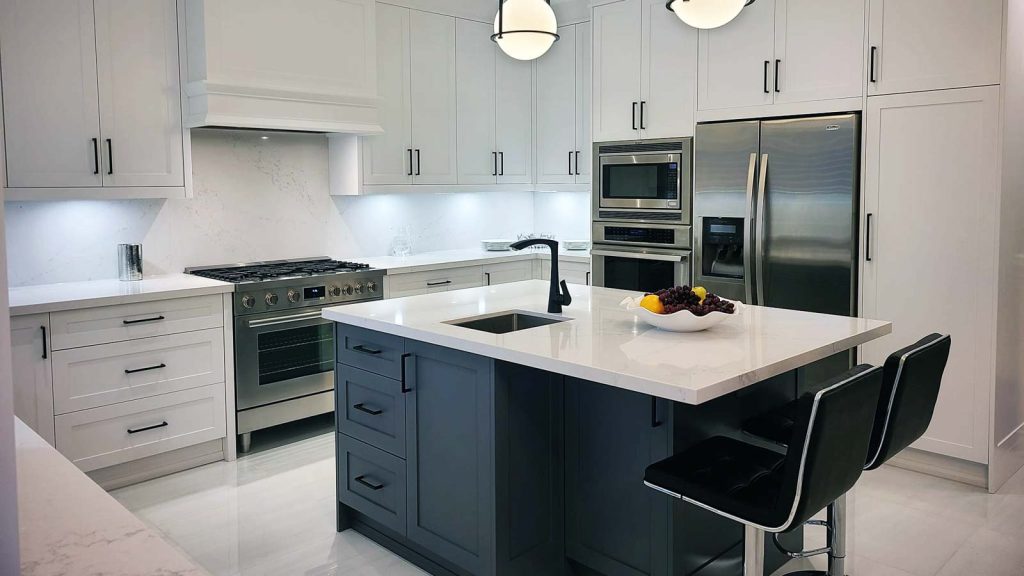
- Island accent — uppers and lowers match, and only the island breaks from that colour. The safest, most popular two-tone approach, and the easiest to get right in a first attempt.
- Upper vs. lower contrast — lighter uppers, darker lowers (the reverse rarely works — see the “cabinet-maker rules” section below for why).
- Tall-unit contrast — pantry towers or a single wall of tall cabinetry in a different finish than the rest of the run, often used to visually anchor one end of the kitchen.
- Hutch or open-shelf accent — a single hutch, buffet, or open-shelving section finished differently from the surrounding cabinetry, common in transitional kitchens.
- Monochrome layering — two shades of the same colour family (e.g., two greens, two blues) rather than a high-contrast pairing, for a subtler two-tone effect.
15 Two-Tone Combinations Worth Considering
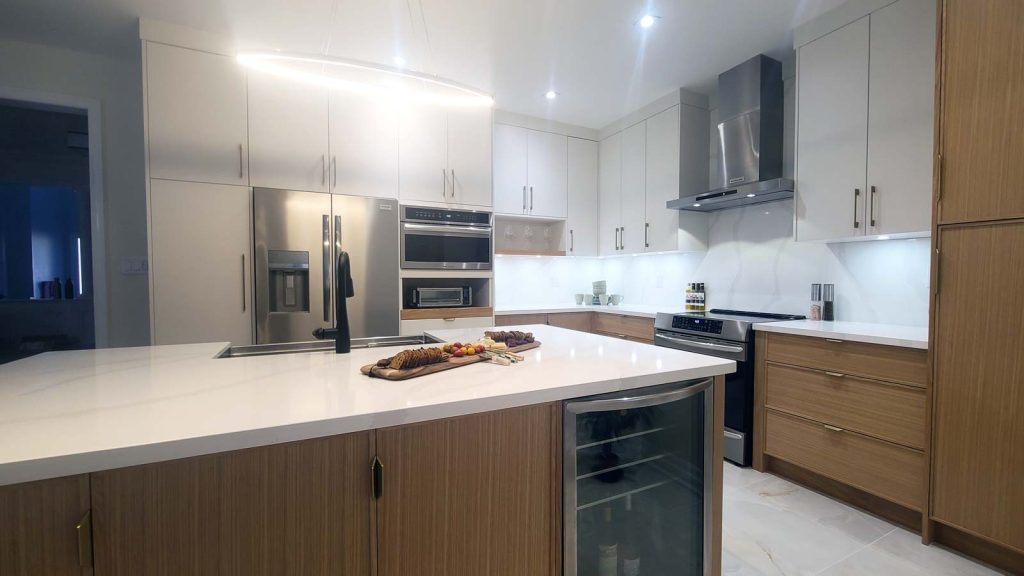
- White uppers + natural wood lowers
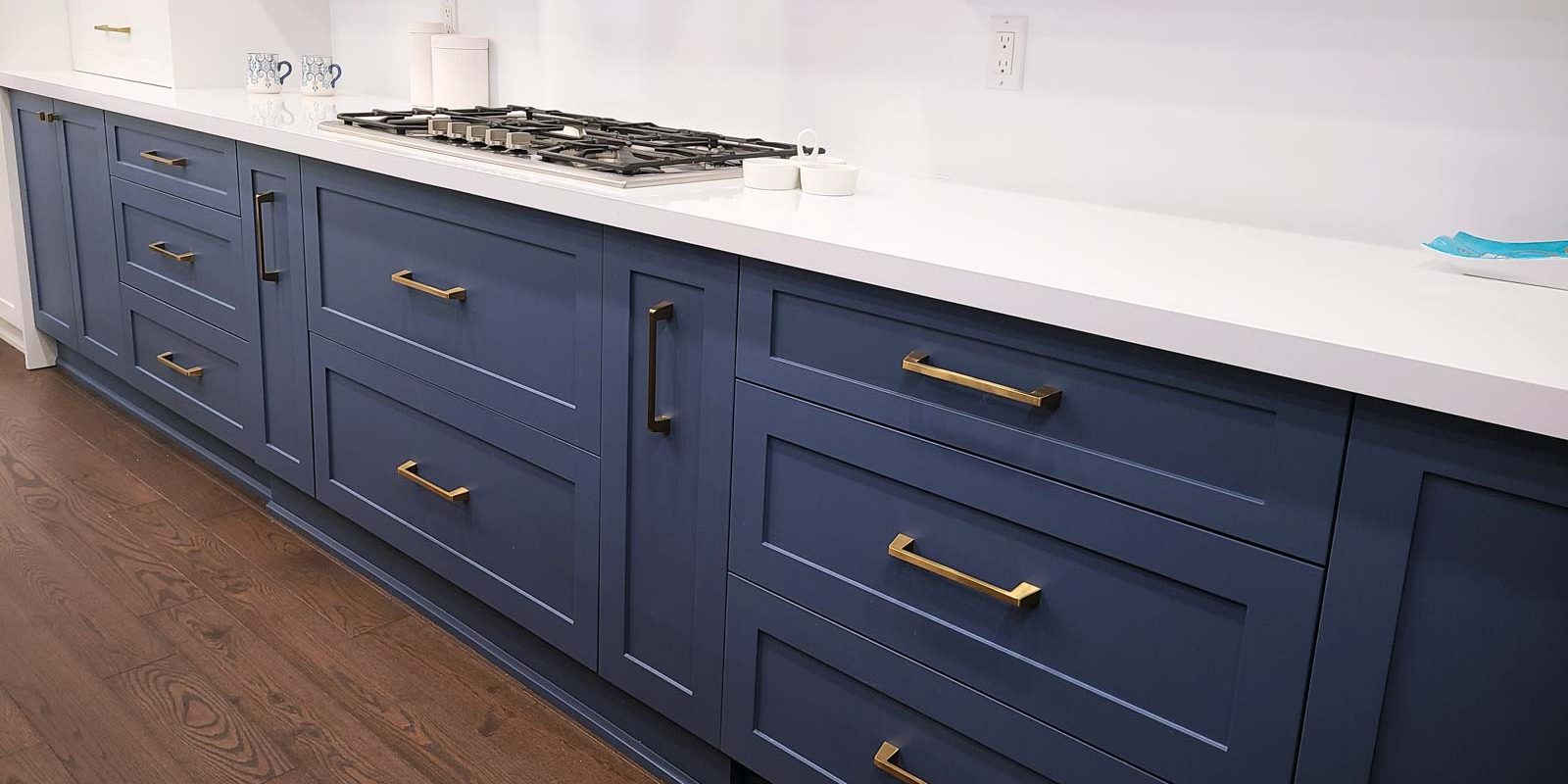
- Navy lowers + white uppers
- Charcoal island + white perimeter cabinets
- Sage green lowers + white oak uppers
- Black uppers + walnut lowers (dramatic, best in larger kitchens)
- White cabinetry + a single black or navy pantry wall
- Two-tone grey (light grey uppers, deep grey lowers)
- Cream uppers + espresso-stained lowers
- White shaker uppers + flat-panel wood-grain island
- Soft blue island + white perimeter
- Terracotta or rust-toned lower accent with white uppers
- Matte black lowers + warm wood open shelving
- Two-tone with brass or matte black hardware as the connecting element
- White uppers + a mixed-material island (wood + painted base)
- Deep green uppers + white lowers (a reversal of the standard formula — flagged separately in the rules section)
Mixing Door Styles: Shaker + Flat Panel Done Right
This is a search Google already sends people to JKB for — “mixing shaker and flat panel cabinets” earns real impressions on the current site. The core rule: keep one style dominant and use the second sparingly, the same logic as colour contrast. A shaker-style perimeter with a flat-panel island (or vice versa) reads as intentional; alternating styles cabinet-by-cabinet reads as unplanned. For a deeper look at how door style itself changes a kitchen’s feel, see our guide on choosing between flat panel, recessed, and raised cabinet doors.
Matching reveal lines, hinge style, and hardware placement across both door styles is what separates a cohesive mixed-style kitchen from one that looks like two different projects got combined.
Do Dark Cabinets Work in a Small Kitchen?
Yes, with conditions — this is a real, recurring question worth answering directly rather than avoiding. Dark lower cabinets in a small kitchen work when:
- The uppers (or open shelving) stay light, keeping the sightline to the ceiling open
- Lighting is strong — under-cabinet and overhead both, since dark finishes absorb more light than they reflect
- The countertop and backsplash stay light to keep contrast, not add a third competing tone
Where it goes wrong: all-dark small kitchens with dim lighting, which is the actual complaint behind most “are dark cabinets bad for small kitchens” searches.
Cabinet-Maker Rules for Two-Tone Kitchens
These are the details that separate a kitchen that looks professionally designed from one that looks like two unrelated colour choices happened to end up in the same room:
- Undertones matter more than the colours themselves. A cool white paired with a warm wood tone will fight each other even if both are “nice” colours individually. Match undertones (warm-to-warm or cool-to-cool) unless you’re deliberately going for high contrast — Benjamin Moore’s own cabinet color guidance makes the same point: matching undertones between cabinet colour and countertop is what creates a cohesive look.
- Sheen consistency across finishes. Two different colours in the same sheen level (e.g., both matte, or both satin) look intentional. Mismatched sheens read as an error, not a style choice.
- Grain direction and species consistency, when wood is one of the two tones — mixing grain direction on adjacent surfaces is one of the most common mistakes in DIY two-tone attempts.
- Hardware should unify, not divide. One hardware finish across both cabinet colours ties the two tones together visually; switching hardware finish and cabinet colour at the same time is one contrast too many. Hardware and layout choices like this are part of the bigger picture covered in our guide to functional kitchen design — two-tone should support how the kitchen works, not just how it looks.
- Durability of dark lowers. Lower cabinets take more daily wear than uppers — fingerprints, scuffs, and cleaning products show more on dark matte finishes than on lighter ones. This is a real, practical trade-off worth mentioning honestly, not glossing over.
Is Two-Tone Still in Style in 2026?
Yes — and the data backs it up. Two-tone kitchen cabinet searches are up roughly 30% year over year, which points to sustained rather than fading interest. The NKBA’s 2026 Kitchen Trends Report, based on a survey of hundreds of North American design professionals, similarly points to bolder cabinetry choices and contrast-driven designs gaining ground alongside enduring neutral tones. The specific colour pairings shift (navy was dominant a few years ago; sage green and warm wood pairings are gaining now), but the underlying idea — breaking up an all-one-colour kitchen — has held steady rather than trended in and out.
The versions most likely to date quickly are very high-contrast, trend-colour pairings (a specific shade of teal, for example). The versions that hold up longest tend to be wood-plus-neutral combinations, since wood tones don’t “date” the way paint trends do.
Real Joseph Kitchen & Bath Projects
One ready-made example already exists on the site: the /blog/kitchen-renovation-before-after-toronto/ post documents a real project pairing white oak lower cabinets with painted MDF uppers in a soft matte tone — described there as “one of our most requested modern combinations.” Pull the photo and details from that post directly into this section rather than starting from scratch.
Frequently Asked Questions
Are two-tone kitchen cabinets a good idea? Yes, for most kitchens — two-tone adds visual depth and a custom-designed feel, and works in both large and small spaces when the placement strategy (see above) fits the room.
Will two-tone cabinets look dated in a few years? Wood-and-neutral pairings tend to age well; very trend-specific colour pairings are more likely to feel dated sooner. Choosing a versatile neutral for the larger portion of the kitchen and reserving the bolder tone for a smaller accent (like an island) is the safer long-term choice.
Should the island or the lower cabinets be the darker colour? Either works, but they serve different goals. A darker island alone creates a single focal point in an otherwise light kitchen. Darker lowers throughout create more visual weight at the bottom of the room, which can ground a kitchen with high ceilings.
Can you mix shaker and flat-panel cabinet doors in the same kitchen? Yes, as long as one style is dominant and the second is used intentionally (an island, a pantry wall) rather than alternated throughout — see the “Mixing Door Styles” section above for the full explanation.