Key Takeaways
The bathroom renovation cost in Toronto ranges from $2,000 to $70,000 in 2026, depending on scope, size, and finish level. Based on Joseph Kitchen & Bath’s recent projects across Toronto, Thornhill, Richmond Hill, Markham, Vaughan, and North York, here is what most homeowners should expect to budget.
- A powder room refresh costs $2,000 to $10,000, while a standard 3-piece bathroom renovation costs $12,900 to $25,000 and a full bathroom renovation costs between $15,000 and $40,000.
- Small to large bathroom renovations range from $12,000 to $42,000, while luxury bathroom renovations can cost between $32,000 and $70,000.
- Most full bathroom renovations take roughly 3 to 5 weeks on site, plus additional time for design, material selections, and permits.
- The four biggest cost drivers are labour (typically 50 to 65% of budget), plumbing moves, tile and glass coverage, and custom features like heated floors or walk-in showers.
- Always set aside a contingency budget of 15 to 20% for unexpected issues, especially in older GTA homes.
Last Updated: August 2026
Last updated :August 2026. All bathroom renovation cost figures in this article are in CAD and reflect current Toronto and GTA market conditions, including 2026 labour rates, material pricing, and permit fees.
How Much Does a Bathroom Renovation Cost in Toronto & the GTA?
A Toronto bathroom renovation in 2026 ranges from a basic powder room refresh around $5,500 to $12,000 up to a high-end primary ensuite at $35,000 to $65,000+. The average bathroom renovation falls somewhere in between, and bathroom size significantly affects renovation costs. For a solid mid-range finish, expect roughly $180 to $230 per square foot. Luxury finishes with custom features like heated floors, walk-in showers, and natural stone push toward $250 to $350+ per square foot.
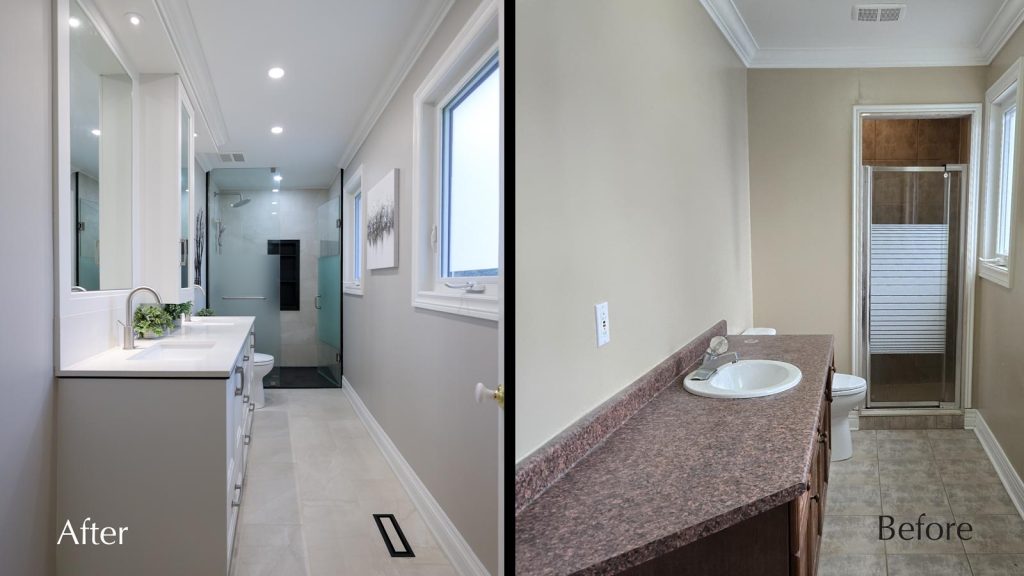
The gap between a simple “replace in place” project and a full gut with layout changes is significant. Keeping existing plumbing in place and choosing mid-range new fixtures might put a 3-piece bathroom at $15,000 to $18,000. Add plumbing relocation, a walk-in shower conversion, and premium materials, and that same bathroom climbs past $25,000 to $30,000.
These figures come from Joseph Kitchen & Bath’s recent projects across Thornhill, Toronto, Vaughan, and Richmond Hill. They reflect what we actually quote and build, not generic national averages that ignore the realities of the GTA market.
Cost by Bathroom Type in Toronto (2026)
Toronto bathroom renovation costs are easiest to understand when broken down by bathroom type. Whether you are updating a small powder room or planning a complete transformation of a primary ensuite, the scope and square footage shape the renovation cost in Toronto more than almost any other variable.
| Bathroom Type | Typical Size | Low Range | Mid Range | High Range | Notes |
|---|---|---|---|---|---|
| Powder Room (half bath) | 15–30 sq ft | $5,500–$9,000 | $9,000–$12,000 | $12,000–$15,000+ | Small powder room with only a toilet and vanity; premium fixtures raise the ceiling |
| 3-Piece Bathroom | 40–60 sq ft | $12,000–$18,000 | $18,000–$28,000 | $28,000–$40,000+ | 3 piece bathroom renovation cost depends heavily on shower type and tile coverage |
| 4-Piece Family Bathroom | 60–80 sq ft | $20,000–$30,000 | $30,000–$45,000 | $45,000–$60,000+ | Larger bathrooms with alcove tub, separate shower, or combined tub/shower |
| Primary Ensuite | 80–120+ sq ft | $30,000–$45,000 | $45,000–$65,000 | $70,000–$100,000+ | Master ensuite renovation cost reflects custom vanity, walk-in shower, freestanding tubs, heated floors |
A powder room renovation cost stays lower because you are working in a small bathroom without a shower or tub. A condo bathroom renovation for a 3-piece unit often tracks toward the mid-to-high range due to building logistics, which we cover below. Cosmetic-only refreshes (replacing fixtures, paint, regrouting) without demolition or plumbing changes can fall below these full-gut ranges, but they offer less long-term value and typically a lower return at resale.
What Drives Bathroom Renovation Costs in Toronto?
Four main drivers shape bathroom renovation costs across the GTA: labour, plumbing moves, tile and glass, and vanity or fixture selection. Understanding these helps most homeowners set a realistic renovation budget before the first tile is pulled off the wall.
Labour vs materials split. Labour costs account for 60% of the renovation budget on a typical Toronto bathroom renovation. Licensed plumbers, electricians, tile setters, and carpenters command higher rates in Toronto and surrounding cities like Vaughan and Markham. Bathrooms require intensive labour for tile setting and waterproofing, which is why labour dominates the budget even on modest projects. On material-heavy projects with premium stone or custom cabinetry, labor costs typically account for 30 to 50% of renovation budgets, but in the GTA, skilled-trades scarcity keeps the labour share consistently high.
Plumbing moves. Moving plumbing can add $2,000 to $5,000 to costs. Relocating a shower drain, toilet, or vanity supply lines means opening up floors or walls, rerouting drains, and often triggering a Toronto building permit. Keeping plumbing fixtures in their existing locations is one of the simplest ways to control costs on a bathroom renovation in Toronto.
Tile and glass. Tile coverage is one of the largest material cost factors. Wall tiles from floor to ceiling in a shower versus a partial surround can double the tile installation cost. Large-format porcelain, natural stone, and mosaic accents push material costs further. A frameless glass shower enclosure alone runs $1,500 to $5,000+.
Electrical work. Adding new electrical circuits for heated floors, upgraded exhaust fans, and additional light fixtures adds meaningful cost, especially in older Ontario homes where the panel may need upgrading.
The Vanity Line Item: Custom vs Big-Box
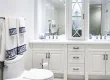
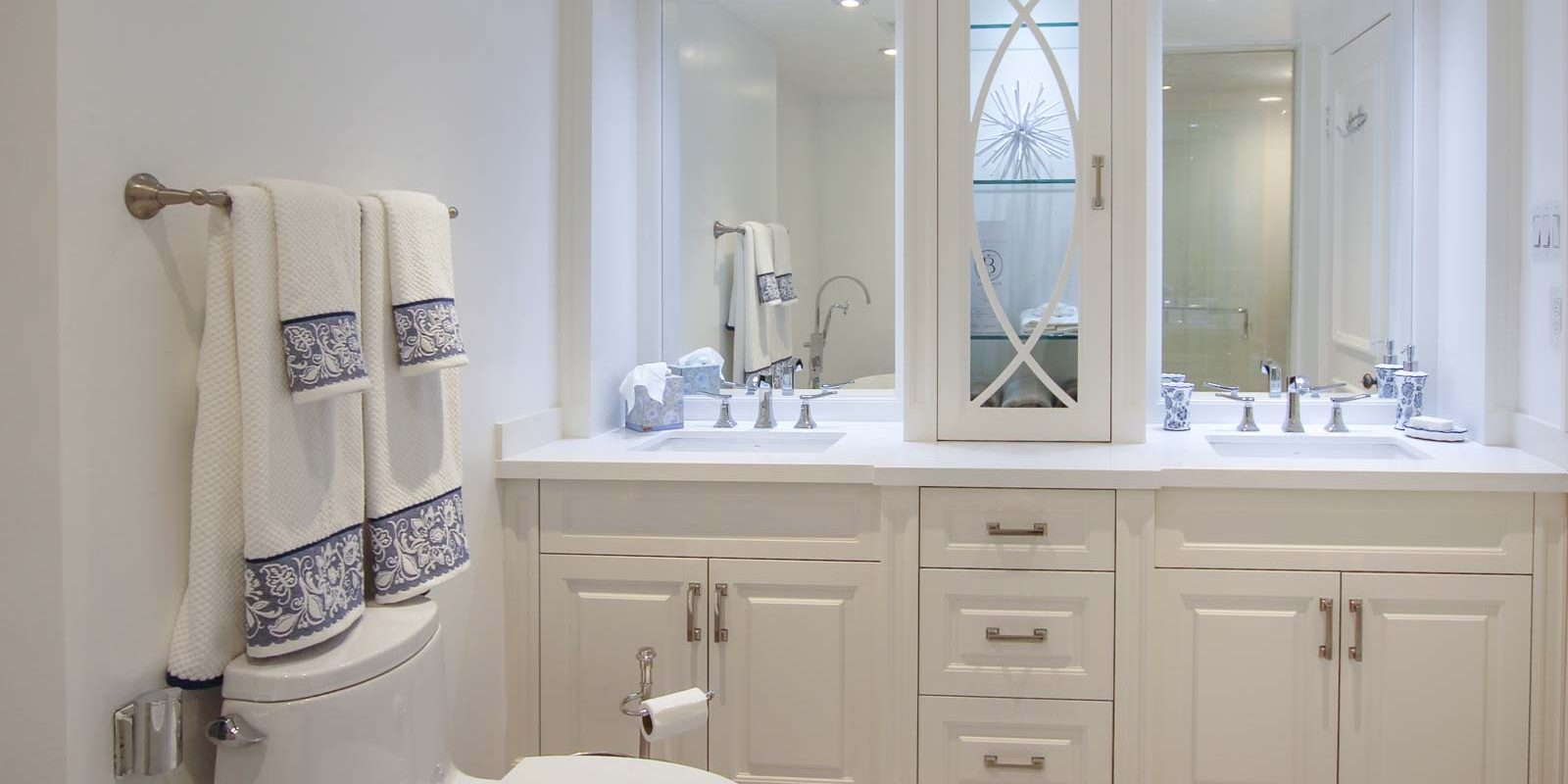
Vanities are the most noticed piece of cabinetry in any bathroom. They are also the line item where the difference between “builder basic” and a crafted bathroom becomes most visible. At Joseph Kitchen & Bath, we build custom cabinetry in our Thornhill woodshop, so we see firsthand how material quality and construction method affect durability in moisture-heavy rooms.
Stock vanities from big-box stores typically cost $800 to $2,500 for a 36- to 60-inch unit. They are built from MDF, particleboard, or thin laminates, come in limited sizes and colours, and tend to swell or delaminate within a few years in a humid Toronto bathroom. Custom and high-end materials increase renovation costs compared to standard materials, but the difference in lifespan is dramatic.
Custom vanities built in our woodshop range from roughly $3,500 to $7,500+, depending on size, wood species, finish, and storage configuration. You get solid wood or high-grade plywood boxes, soft-close hardware, integrated storage solutions, and colour-matched finishes designed for Classic, Transitional, or European Modern styles. For a deeper comparison of cabinet materials, see our guide on MDF vs wood vanities.
| Feature | Stock / Big-Box Vanity | Custom Vanity (JKB) |
|---|---|---|
| Cost | $800–$2,500 | $3,500–$7,500+ |
| Materials | MDF, particleboard, laminate | Solid wood, marine-grade plywood |
| Durability | 3–7 years in humid bathrooms | 15–25+ years with proper care |
| Sizing | Standard widths only | Built to exact dimensions |
| Style Options | Limited finishes | Classic, Transitional, European Modern |
| Storage | Basic shelves/drawers | Custom organizers, pull-outs, integrated hampers |
| Resale Value | Minimal impact | Noticeable premium |
Explore our full range of bathroom renovation services in Toronto to see how custom millwork integrates into a complete bathroom renovation.
Condo vs House Bathroom Renovations: What Changes the Cost?
A condo bathroom renovation in Toronto, North York, or Vaughan often costs $1,000 to $4,000 more than a comparable freehold house project. The bathroom itself may be identical in size, but the logistics and rules surrounding the work are not.
Condo-specific factors include obtaining a board approval package (which can take weeks), adhering to strict renovation rules around working hours, noise, and water shut-offs, and paying for elevator protection and waste disposal through loading docks. Most buildings require proof of insurance and WSIB compliance from every trade entering the building. Condo renovations can incur additional costs due to strict building regulations and work-hour limits.
Limited access stretches the timeline. Tradespeople lose productive hours to elevator waits, parking logistics, and material staging in hallways. Some condo corporations restrict plumbing relocation and wet-wall changes entirely, which limits layout options but can sometimes help control the renovation budget.
Freehold houses offer more flexibility for plumbing and structural changes. However, in older Toronto neighbourhoods, there is a higher risk of hidden issues behind walls, which we cover in the section on house age below.
Detailed Cost Breakdown: Labour, Plumbing, Tile, Glass & Electrical
Here is a more granular look at where the project cost actually goes for a typical 3-piece or 4-piece bathroom renovation in Toronto.
| Trade / Item | Typical Range (CAD) |
|---|---|
| Demolition and waste disposal | $1,000–$2,000 |
| Plumbing rough-in (no relocation) | $1,500–$3,000 |
| Plumbing relocation (if needed) | +$2,000–$5,000 |
| Electrical work (circuits, lighting, fan) | $1,200–$3,000 |
| Tile installation (walls + floors) | $3,000–$8,000+ |
| Glass shower enclosure | $1,500–$3,500+ |
| Vanity and countertop | $2,000–$7,500+ |
| Painting and finishes | $800–$1,800 |
| Heated floors | +$1,000–$2,000 |
Adding a walk-in shower where there was previously a tub raises plumbing costs versus a simple alcove tub swap. Heated floors are a popular comfort upgrade in master ensuites across Markham and Vaughan, typically adding $1,000 to $2,000 depending on square footage and the electrical circuits required. These are typical ranges for 2026 and actual quotes are always confirmed after a site visit and detailed design by our full trades team.
Planning for Permits, Plumbing Rough-Ins & Electrical Work
Code-compliant plumbing work and electrical work are non-negotiable for a safe bathroom renovation in Toronto and the GTA. They influence both the timeline and the final cost, and skipping them creates serious problems.
Plumbing rough-in refers to the drain and supply lines placed in walls and floors for fixtures like the toilet, sink, tub, and shower. When the existing layout stays the same, rough-in costs are modest ($1,500 to $3,000). Change the layout, and plumbing costs climb by $2,000 to $5,000+ because new drain lines, supply lines, and venting must be installed and inspected.
Electrical upgrades for heated floors, GFCI outlets, additional vanity lighting, and proper exhaust fans often require new electrical circuits and ESA inspections. In older Toronto homes with knob and tube wiring, this work can become more extensive and costly.
Permits are required for plumbing relocations and electrical circuits. A City of Toronto building permit is needed when you move plumbing, alter structural elements, or add new wiring. Basic permits cost $11.53 per square metre in Toronto, with a minimum fee of roughly $214. Permit fees in Toronto can range from $500 to $2,000 depending on scope. Skipping permits can lead to stop-work orders and fines, and unpermitted work complicates future home sales and inspections. The City of Toronto Building Division provides full details on when permits apply under the Ontario Building Code.
Timeline & Payment Schedule for a Typical Bathroom Renovation
Most full bathroom renovations take 3 to 5 weeks on site, plus several weeks beforehand for design, material selections, and permits or condo approvals. A dedicated project manager coordinating trades makes a meaningful difference in keeping the schedule on track.
Typical week-by-week outline:
- Week 0: Design finalized, material selections confirmed, permits submitted, condo approvals obtained if applicable
- Week 1: Demolition, framing adjustments, plumbing rough-in, electrical rough-in
- Week 2: Inspections, proper waterproofing and membrane installation, tiling begins
- Week 3: Tile completion, vanity installation, replacing fixtures and final installation of toilet, faucets, and accessories
- Week 4: Glass enclosure install, painting, finishing touches, and final walkthrough
Timing factors that stretch the schedule include condo work-hour limits, custom glass lead times, custom vanity fabrication in our Thornhill woodshop, and permit inspection fees and scheduling. For a deeper step-by-step breakdown, see our bathroom renovation timeline.
Payment milestones with a reputable contractor typically follow a structure: deposit at contract signing (usually 10 to 20%), progress payments at key stages (post-rough-in, post-tiling), and final payment at completion. We always work from written agreements so there are no surprises on either side.
How to Budget Smart for a Bathroom Renovation in Toronto
Set a realistic renovation budget range first, then add a contingency fund of 10% to 15% on top. For homes built before roughly 1985 in Toronto, East York, or older parts of North York, we recommend stretching that contingency to 15 to 20%.
Where you can save: Using off-the-shelf materials can significantly reduce expenses. Choosing porcelain tile instead of natural stone, selecting mid-range fixtures from brands like Moen, Delta, or Riobel instead of ultra-luxury lines, and simplifying tile patterns all trim the project cost without sacrificing quality. Renovating during off-peak seasons (late fall through early winter) can lower costs because trade availability is higher. Refinishing an existing tub costs $300 to $600 instead of replacement, which is worth considering if the tub is structurally sound.
Where not to cut corners: Waterproofing systems require appropriate membranes for effective moisture control. Skimping on plumbing quality, electrical safety, or skilled labour almost always costs more down the road through leaks, mould, or failed inspections. Hiring a professional contractor can save money in the long run by getting these critical items right the first time.
Good value upgrades include heated floors in master ensuites, well-vented exhaust fans, quality mixing valves, and durable custom vanities that withstand decades of daily moisture. Functional upgrades outperform cosmetic changes in ROI.
Ready to explore realistic budgets and materials in person? Visit our Thornhill showroom or request a free in-home estimate to start your renovation journey with the right contractor.
How Style Choices Affect Cost: Classic, Transitional, and European Modern
Joseph Kitchen & Bath designs bathrooms in three main style verticals, and each one can be executed at different price points. Style interacts with materials and labour in ways that shift a project from mid-range to premium within the same bathroom footprint.
Classic: Raised-panel doors, warmer wood tones, crown moulding, and more ornate trim. The additional custom millwork and finishing labour raise costs modestly. Natural stone details and decorative hardware are common.
Transitional: Shaker-style doors, simple clean lines, and neutral palettes. This is often the sweet spot between cost and timeless appeal for families across Toronto and Vaughan. Material choices tend to be straightforward, keeping project management and final cost predictable.
European Modern: Flat-panel fronts, integrated pulls, large-format tile, floating vanities, and frameless glass. Premium materials can significantly increase renovation costs here because large-format tile demands more precise cutting, and flush details require exact waterproofing and installation. The result is striking, but budget accordingly.
Walk-In Showers, Tubs & Special Features: How Much Do They Add?
Converting a tub to a walk-in shower, adding a freestanding tub, or integrating heated floors and niche lighting are the “nice to have” items that shape the top of the renovation budget. These custom features transform a basic bathroom renovation into something that genuinely changes how the space functions.
A walk-in shower as part of a bathroom renovation typically adds roughly $9,000 to $18,000 to the project budget in Toronto, depending on size, tile type, glass enclosure, and whether plumbing is moved. Converting an existing tub without moving the shower drain is on the lower end. Expanding the footprint, adding built-in benches or recessed niches, or using large-format tile pushes the walk in shower cost higher.
For tubs, an acrylic alcove tub replacement is modest ($500 to $1,500 for the fixture). Freestanding tubs with dedicated plumbing run $1,500 to $5,000+ for the fixture alone, plus installation. Steam showers, linear drains, and under-cabinet lighting each add labour and material cost but can be prioritized based on the homeowner’s goals.
Accessible bathroom renovations typically cost $15,500 to $45,000. Features like zero-threshold showers, grab bars, wider doors, and handheld sprays for an accessible bathroom usually add 15 to 30% to a comparable standard bathroom renovation, but they can prevent expensive future retrofit costs. These are increasingly common requests from Toronto homeowners and in Richmond Hill homes designed for aging in place. For inspiration, browse our bathroom project gallery.
House Age & Hidden Conditions: Why Older Homes Need a Contingency
Older Toronto and GTA homes, especially those built before the 1980s, often harbour hidden issues behind bathroom walls: galvanized plumbing, cast-iron stacks, outdated electrical (including knob and tube wiring), minimal insulation, or even asbestos in some materials. Older Toronto homes may have hidden water damage or outdated wiring that adds to renovation costs, and these discoveries happen after demolition when the walls are open.
We recommend a contingency budget of 15 to 20% for homes in neighbourhoods like The Beaches, Leslieville, older North York, and parts of Scarborough, where unexpected repairs are more common. Several factors can drive up unforeseen costs, including rotten subfloor, the need to upgrade plumbing to copper or PEX, increasing electrical panel capacity, remediating minor mould from old leaks, and levelling floors for proper tile installation.
Joseph Kitchen & Bath documents hidden issues with photos and written change orders and never proceeds with extra work without homeowner approval. For renovation planning best practices, the National Kitchen & Bath Association (NKBA) offers useful consumer guidance on budgeting and contractor selection.
Frequently Asked Questions About Bathroom Renovation Costs in Toronto
Below are answers to the most common questions Toronto homeowners ask about bathroom renovation cost and process. Each answer reflects 2026 GTA pricing and real project experience.
Can you renovate a bathroom for $10,000 in Toronto?
A $10,000 budget can cover a small powder room refresh or a very basic bathroom renovation with no plumbing moves. At that level, expect paint, simple tile replacement in a small area, basic fixtures, and minimal labour. A full demolition with new plumbing rough-ins and custom features requires a higher budget. Most bathroom renovations that include a shower or tub start above $12,000 to $15,000 in the GTA.
What is the biggest expense in a bathroom remodel?
Labour is typically the single largest expense, often accounting for 55 to 65% of the total project cost in the GTA. This covers licensed plumbers, electricians, tile setters, and carpenters. Tile and glass become the second-largest cost category when homeowners choose full-height tiling and custom walk-in showers with frameless enclosures.
How much does a walk-in shower cost in Toronto?
A walk-in shower as part of a bathroom renovation typically adds $9,000 to $18,000 to the project budget, depending on size, tile type, glass enclosure, and whether plumbing is moved. Converting an existing tub without moving the drain sits on the lower end, while expanding the shower footprint, adding benches or niches, or using large-format tile pushes costs higher.
How much does a custom vanity add vs a stock vanity?
Upgrading from a stock big-box vanity ($800 to $2,500) to a custom Joseph Kitchen & Bath vanity ($3,500 to $7,500+) generally adds several thousand dollars to the project. For master ensuites and long-term homes in areas like Vaughan or Richmond Hill, many clients find the added cost worthwhile for both daily function and resale value. A custom vanity cost reflects better materials, tailored sizing, and construction designed for the moisture of a real bathroom.
How long does a bathroom renovation take in Toronto?
A standard bathroom renovation takes about 3 to 5 weeks of on-site work once all materials are ready, plus time beforehand for design, selections, permits, and condo approvals where applicable. Common causes of delays include permit review time, condo board approvals, custom glass or vanity lead times, and unexpected structural issues discovered after demolition. For a detailed week-by-week breakdown, see our complete bathroom renovation guide.
Do I need a permit for a bathroom renovation in Toronto?
Cosmetic updates like replacing tile, swapping plumbing fixtures in the same spots, or painting typically do not require a building permit. However, moving plumbing, changing structural elements, or adding new electrical circuits triggers a permit under the Ontario Building Code. City of Toronto permit fees start at around $200. Requirements vary by municipality and building type. Joseph Kitchen & Bath helps Toronto homeowners understand when permits are needed and coordinates the process with local authorities. Permit costs are a small fraction of the overall renovation cost but protect you legally and financially.
Plan Your Toronto Bathroom Renovation Confidently
An honest, detailed cost conversation early on is the best way to avoid surprises and get the bathroom your family actually needs. Bathroom renovations in Toronto return 70 to 85% of costs at resale, standard renovations yield a 60 to 75% ROI, and luxury renovations return 45 to 60% of investment upon sale. A well-executed bathroom renovation can increase home value by 16%, making it one of the strongest renovation investments for GTA homeowners.
We encourage you to browse our complete bathroom renovation guide for a deeper look at the process, and explore our bathroom project gallery for real GTA examples of finished work. Using sustainable materials and investing in quality trades and waterproofing systems are decisions that pay off for years to come.
Book Your Free In-Home Consultation to receive a site-specific estimate for your bathroom renovation project. You can also call us directly at (905) 707-7756 if you prefer to start the conversation by phone.
If you are still exploring ideas, visit our Thornhill showroom and woodshop to see custom vanities, tile options, and premium fixtures in person. There is no substitute for touching the materials and seeing how they come together in a finished space.
About the Author – Joseph Darvish, Founder & Lead Designer, Joseph Kitchen & Bath
Joseph Darvish is a kitchen remodel expert and the founder of Joseph Kitchen and Bath. With over 30 years of experience in custom cabinetry and full-service renovation, he personally leads every project from design through installation at his Thornhill, ON showroom and woodshop.
Instagram: instagram.com/josephkitchenbath/ | Facebook: facebook.com/JosephKitchenBath | josephkitchens.com/about-us/
Produced by: Joseph Kitchen & Bath – craftsmanship, relationships, and long-term value for Toronto and GTA homeowners since 1994.
Disclaimer
The information presented here is intended as general advice only. For exact pricing tailored to your specific needs, it is essential to seek guidance from a qualified expert and to obtain a written, site-specific estimate. All bathroom renovation cost figures are approximate 2026 GTA ranges and subject to change based on market conditions, material availability, and project scope.