
As kitchen contractors, we handle the whole project: design, custom cabinetry, countertops, plumbing, electrical, permits and installation, with one team from start to finish. Below, you’ll find how we approach each type of Toronto home, the neighbourhoods we work in most, and what to expect from permits and condo rules.
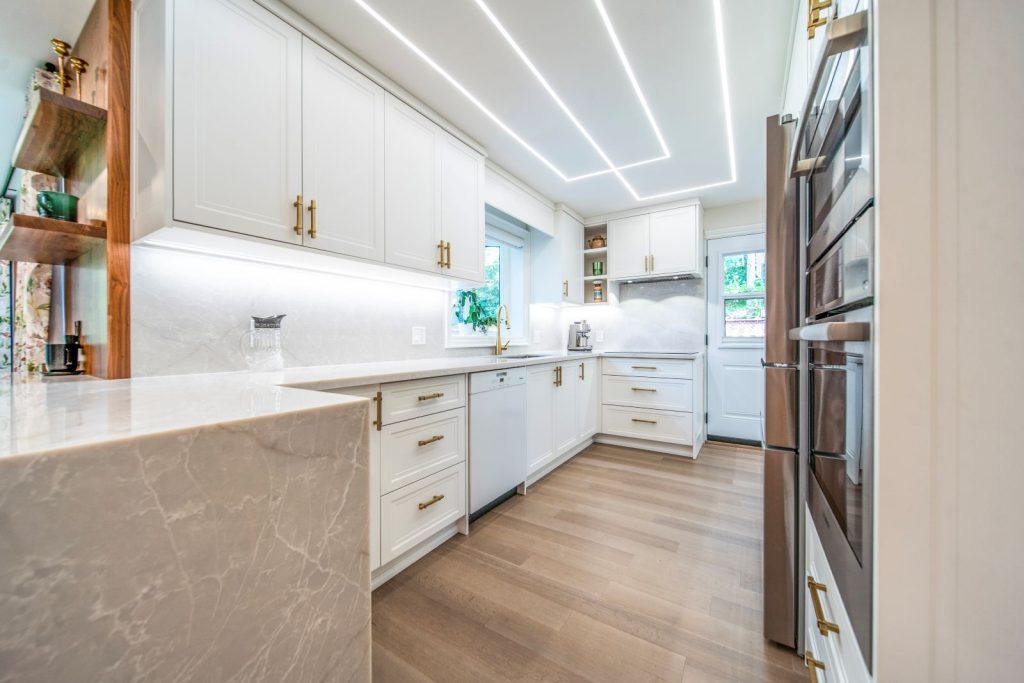
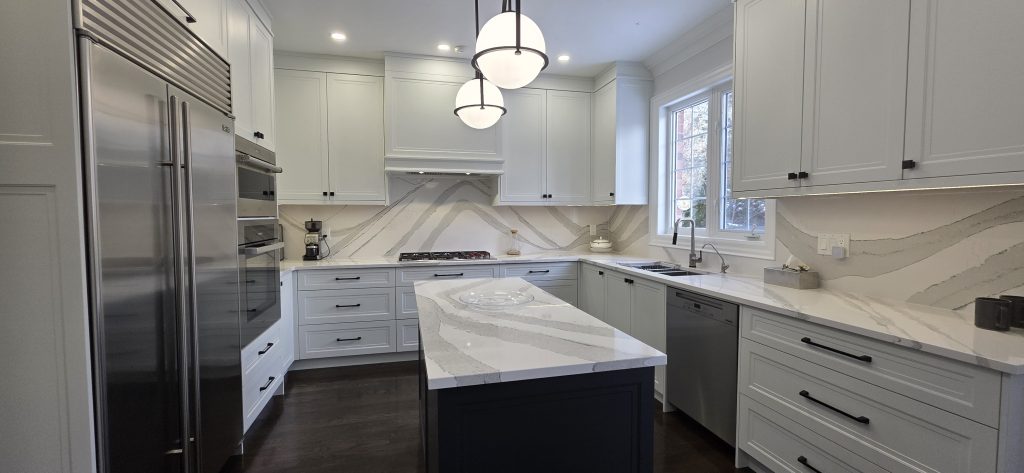
How We Renovate Kitchens in Different Toronto Homes
Victorian and Edwardian semis and row houses
Found across Cabbagetown, Leslieville, Riverdale, the Annex and Roncesvalles, these homes usually have long, narrow kitchens at the back of the house, sometimes as little as 9 or 10 feet wide. Floors are rarely level, walls are often plaster and lath, and the wiring and plumbing may date back decades.
We plan these kitchens as galleys or one-wall layouts with a slim island where width allows. Because every cabinet is built in our own shop, we can scribe cabinets to uneven walls and build to the exact width of the room instead of filling gaps with fillers. We also check for knob-and-tube wiring and galvanized pipes early, so there are no surprises once the walls are open.
1920s–1940s detached homes
In Leaside, Lawrence Park, Forest Hill and Bedford Park, many homes still have a separate kitchen, dining room and pantry. Most owners want to open the kitchen to the dining room, which usually means removing or partly removing a wall.
We coordinate the engineer, the beam and the permit, then design cabinetry that suits the character of the house: inset or shaker doors, crown moulding and painted finishes that look right beside original trim. Many of these kitchens become Classic or Transitional designs.
Post-war bungalows
East York, Don Mills, Wexford and much of North York and Scarborough have 1950s–60s bungalows with small, closed kitchens. The most common request is to open the kitchen to the living room and add an island. These projects often need a beam and a permit, but they transform how the house works.
Condos
Condo kitchens from the Waterfront to Yonge and Eglinton are small, have fixed plumbing and electrical, and come with building rules. We work with your property manager on the alteration agreement, elevator bookings and permitted working hours. We make the most of every inch with full-height cabinets, slim appliances and built-in storage. Many condos have no gas line, so we plan around induction cooking.

Neighborhoods We Serve in Toronto
Toronto Kitchen Renovation Projects
What to Expect Working With Our Toronto Team
Showroom in Thornhill — Serving All of Toronto
Toronto Neighbourhoods We Serve
We regularly complete kitchen renovations across Toronto and the surrounding GTA, including:
- Downtown Core & Corktown
- Leslieville & The Beaches
- High Park & Roncesvalles
- Yorkville & Midtown
- North York
- Scarborough
- Etobicoke
- East York
From Yonge and Eglinton to the waterfront, if it’s in Toronto, we’ll come to you.


Permits, Heritage Homes and Condo Rules in Toronto
When a Toronto kitchen renovation needs a permit
Replacing cabinets, counters and finishes in the same layout usually does not need a building permit. A permit from the City of Toronto is generally required when the work includes:
- Removing or changing a load-bearing wall
- Moving or adding plumbing, such as a new sink location or an island sink
- Changes to venting or structure
New electrical work also needs a notification filed with the Electrical Safety Authority, which our licensed electrician handles. We prepare the drawings, apply for the permits and book the inspections, so you don’t have to.
Older and heritage homes
Heritage designation in Toronto mostly concerns a home’s exterior, so most interior kitchen work is not affected. If your home is individually designated or in a heritage conservation district, we check what applies before work starts. More often, the real challenges in older homes are inside the walls: plaster, old wiring, uneven floors and undersized beams. We plan for these in the quote rather than discovering them halfway through.
Condo renovations
Most Toronto condo buildings require an alteration agreement or board approval before a kitchen renovation. Expect rules on working hours, elevator bookings, noise and where materials can be stored. We prepare the documents your property manager asks for, including drawings and proof of insurance, and schedule deliveries around the building’s rules.
Ready to transform your home?
Contact the cabinet maker in Toronto that homeowners have relied on for custom quality and exceptional service. Request your free online quote today and take the first step toward your dream kitchen remodeling in Toronto project.
Frequently Asked Questions
Do you serve all neighbourhoods in Toronto?
Yes — we work across all Toronto neighborhoods including Leaside, Forest Hill, Rosedale, Lawrence Park, The Annex, Etobicoke, Scarborough, and North York. If you’re in the Greater Toronto Area, including Markham, Vaughan, Thornhill, and Mississauga, we serve those areas too. Not sure if we cover your street? Call us and we’ll confirm right away.
Are you licensed kitchen contractors in Toronto?
Yes. Joseph Kitchen & Bath is a fully licensed and insured renovation contractor operating in Toronto and the GTA. We handle all City of Toronto building permits required for kitchen renovations on your behalf, so you don’t need to manage any paperwork. All our work meets Ontario Building Code standards.
How far do you travel for kitchen renovation projects?
We regularly take on projects within a 50 km radius of Toronto, covering the full GTA. For larger custom kitchen or whole-home renovation projects, we may travel further — contact us to discuss your location and project scope.
Why should I hire a local Toronto kitchen contractor instead of a national chain?
A local contractor knows Toronto homes. Older properties in neighbourhoods like The Annex or Rosedale often have non-standard layouts, aging plumbing, or low-voltage wiring that needs to be worked around. We’ve renovated 500+ kitchens across Toronto over 25 years, so we’ve seen every situation and know how to handle city permits, condo board requirements, and heritage property restrictions that out-of-town contractors typically aren’t familiar with..